Resumen
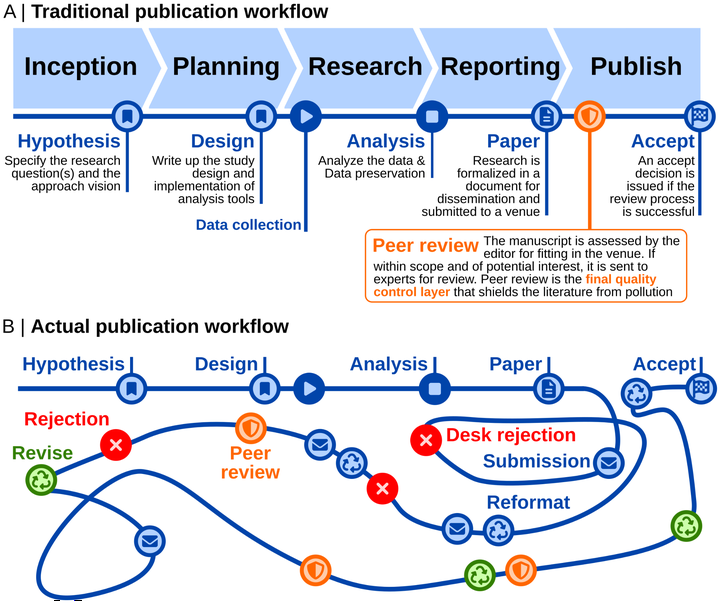
By rewarding speed, volume, and coherent positive narratives, traditional publishing incentivizes questionable scientific practices and analytic flexibility. The latter especially contributes to blurring the distinction between exploration and confirmation, which inflates the apparent strength of confirmatory claims. This systemic issue has gone unchecked for decades, leaving the scientific community with a body of scholarly literature that is unreliable and lacking validity. Registered Reports (RRs) address problematic publishing practices by requiring a priori registration of confirmatory tests, which is peer-reviewed before the research begins (stage 1). The editorial acceptance of a stage 1 plan establishes a commitment to publication regardless of research outcomes. Publication remains, nonetheless, contingent on a second peer review and editorial scrutiny (stage 2) to verify that the approved plan was followed, all deviations were transparently disclosed and justified, confirmatory and exploratory claims are clearly delineated, and the integrity of the design was maintained. Meta-scientific comparisons indicate that RRs reduce outcome-based publication bias and improve methodological rigor without compromising perceived novelty. By making accepted RR protocols and their review history citable research outputs, RRs also strengthen recognition for peer-review work. In this perspective, we argue that RRs should become the primary mode of confirmatory publication moving forward.
Juan David Leongómez
Profesor Titular
Mis intereses de investigación incluyen los procesos de selección de pareja y la comunicación vocal en humanos, con una aspiración hacia la comprensión de la musicalidad. También estoy interesado en bioacústica y psicoacústica, así como en estadística y programación en .